If Glucosamine Didn't Fix Your Joint Pain, This Harvard Study Explains Exactly Why
A $12 million clinical study of 572 patients confirmed what millions of seniors already suspected — and the real reason your joints keep deteriorating has nothing to do with wear and tear.
You wake up and before your feet even touch the floor, you already know what kind of day it's going to be. That deep, grinding ache in your knees — the one that used to come and go — is just there now. Every morning. Getting out of bed takes longer than it used to. Stairs are something you think about before you take them. The things you used to do without a second thought — kneeling down in the garden, playing with your grandchildren on the floor, even opening a jar — have quietly become things you plan around.
If you've already tried glucosamine, chondroitin, fish oil, or turmeric — and found yourself wondering why nothing seems to actually make a difference — you're not wrong to be skeptical. You didn't fail. The supplements failed you. And there's a specific, documented reason why — a reason most doctors still aren't talking about, and that the $78 billion pain management industry has very little incentive to publicize.
Joint Pain Epidemic: Ignored by the $78 Billion Industry?
A shocking study involving 572 patients, costing over $12 million, revealed glucosamine as ineffective for joint pain relief. As Harvard University sheds light on groundbreaking advancements in joint health, millions continue to suffer silently.
Every day, people experience real agony — bones grinding with each step, stairs feeling insurmountable, simple tasks like gripping a glass or tying a shoelace becoming a painful ordeal. Yet effective alternatives remain largely hidden from mainstream discourse.
Why is there such a lack of discourse around effective alternatives? Is the profit-driven pain management industry — valued at $78 billion — partly to blame?
Harvard Study: Glucosamine's $12M Failure Exposed
In a rigorous 2-year trial of 572 patients costing over $12 million, supplementing with glucosamine and chondroitin produced no benefits in pain reduction, joint function, or slowing cartilage loss — compared to a placebo.
"Glucosamine and chondroitin have now been debunked as a means for supporting joint health." — Dr. Antonios Aleprantis, Director, Osteoarthritis Center, Harvard-affiliated Brigham and Women's Hospital
Meanwhile, a separate Harvard study of over 2,000 ancient skeletons revealed something even more surprising: our ancestors — who physically worked far harder than we do — showed dramatically less joint decay. The wear-and-tear theory didn't hold up.
People with age-related joint decay have diminished hyaluronic acid concentrations in their synovial fluid — the thick, gel-like liquid that cushions, lubricates, and nourishes cartilage from inside the joint. We lose at least 2% of it per year after age 40.
The Real Cause of Joint Decay (It's Not Wear and Tear)
According to research, joint decay begins not with overuse — but with the gradual loss of hyaluronic acid from your synovial fluid. This fluid, sometimes called "joint jello" by researchers, performs three critical functions:
- Lubrication — coats cartilage so bones slide smoothly without friction
- Nourishment — delivers oxygen and nutrients to cartilage, which has no blood supply
- Protection — shields cartilage from inflammatory proteins that would otherwise attack and break it down
When hyaluronic acid levels decline — which research shows begins as early as your 30s — this fluid thins out. Cartilage loses its cushion. It starves. Inflammation floods in. The result is the bone-on-bone grinding, stiffness, and swelling that millions of seniors know all too well.
What One Doctor Found After Decades of Treating Joint Pain
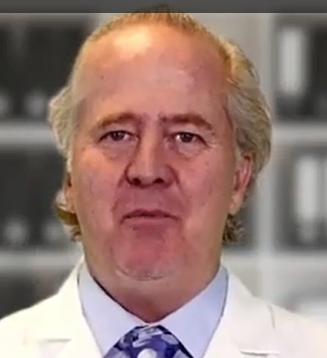
Dr. Mark Wise, M.D.
Medical Research Director · University of Kansas School of Medicine
"Taking glucosamine to fix joint pain is like changing your car's tires while forgetting to add engine oil. If the engine has no oil, nothing else you do will make a difference."
After decades treating both veterans and everyday Americans, Dr. Wise became convinced that conventional joint treatments were failing patients — not because of lack of effort, but because they were targeting the wrong thing entirely. His research led him to a discovery that challenges everything the industry has been saying for years. He details his full findings in the presentation below.
Real People. Real Results.
"20 years on prescription pain protocols. Before: could barely climb stairs without feeling like my knees were on fire. After: I walk up my front porch steps without pain and engage in daily activities with ease."
John Carter, 64
Boulder, CO

"15 years using glucosamine. Before: my hands were too stiff to hold a gardening trowel. After: I can enjoy gardening again and have resumed all my favorite hobbies."
Linda Thompson, 72
Sarasota, FL

"10 years relying on traditional anti-inflammatories. Before: every step felt like bones grinding together. After: I now walk comfortably and feel in control of my joint health for the first time in a decade."
Michael O'Neal, 69
Portland, OR
Watch the Full Harvard Discovery Presentation
A physician explains the real reason conventional treatments fail — and what the research actually points to.
See the Full Presentation →Why Most Joint Supplements Miss the Point Entirely
Most joint supplements on the market target cartilage — the tissue between bones. But according to the Harvard research summarized in this article, cartilage breakdown is a consequence, not the cause. Targeting it directly is treating the symptom while the underlying problem continues unchecked.
The research points to something happening one step earlier — inside the joint itself — that conventional formulas have consistently overlooked. What that is, and what the clinical evidence shows about addressing it, is explained in full in the presentation below.
Expert Answers: Your Questions About Joint Health
Why didn't glucosamine work for my joint pain?
Because glucosamine targets cartilage — but the research now suggests cartilage loss is a downstream effect, not the root cause. Addressing the wrong thing means the real problem keeps progressing. The full explanation is in the presentation.
What is "bone on bone" pain and can it be addressed without surgery?
Bone-on-bone pain occurs when the cushioning between joint surfaces has broken down significantly. Whether surgery is necessary depends on the underlying cause — and new research suggests that cause has been misidentified for decades. Watch the presentation for the full picture.
How quickly can results be felt?
That depends on what's actually being addressed. The clinical research referenced in this article shows a specific timeline — but the details are covered in the presentation, not summarized here.
Who is the doctor behind this research?
An award-winning physician and Medical Research Director with decades of clinical experience treating joint conditions in both military and civilian settings. His background and full findings are presented in the video.
What is the next step?
Watch the free presentation. It covers the research, the real cause of age-related joint decay, and what the clinical evidence points to — in plain language, without the industry spin.
Ready to Learn What Actually Works for Joint Pain?
Watch the free presentation and see the clinical evidence for yourself.
Watch the Free Presentation Now →